The water system in Springfield developed in phases in the mid-nineteenth and early twentieth centuries. Prior to that time, most of Springfield’s water source came from private wells, local streams, or springs. Formation of the Springfield Aqueduct Company in 1848 facilitated the use of Van Horn Reservoir, which became the city’s primary water source. As population in the city increased during the Civil War due to industrialization, the city began investigating new water supplies. Ludlow Reservoir was completed in 1875 and its 1.75 billion gallon supply became the city’s main water source for the next 35 years.
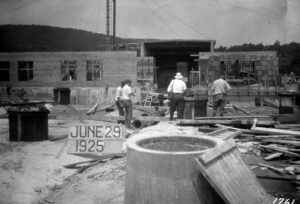
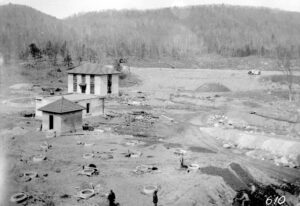
In the early twentieth century, the continuing expansion of the city drove the development of a new water supply 20 miles to the west of the city in the Little River Watershed. In 1910 Borden Brook Reservoir in Granville became the main water supply for the city, with treatment taking place at the newly constructed West Parish Filters Water Treatment Plant in Westfield. The main water supply changed yet again in 1931, when Cobble Mountain Reservoir in Blandford/Granville was completed. Borden Brook feeds into Cobble Mountain Reservoir and both reservoirs remain the main water supplies for the system today, while Ludlow Reservoir serves as an emergency water supply.
The system was operated by the Springfield Water Department until 1996, when the Springfield Water and Sewer Commission was established under Chapter 40N of the Massachusetts General Laws. Today the Commission and its approximately 230 employees administer, operate, and maintain both the drinking water and wastewater systems that serve approximately 250,000 people in the lower Pioneer Valley.
Luigi Bondi immigrated from Italy with his wife and children in the late 1800s. He was a successful owner of a produce business, and purchase an island on the Connecticut River in 1889 for $100. It is not clear if the land he purchased was actually an island at the time, but local lore identifies an island just under the west end of the Memorial Bridge. Mr. Bondi is also thought to have purchased land in West Springfield surrounded on three sides by water (the Connecticut and Agawam Rivers), which were known as Big Island and Hermit Island (also known as Little Island or Campbell’s Island).
Mr. Bondi tended to peach trees on the island for his produce business and had plans to create a recreation area in the future. Over time the water changed course and the two islands became one, which is the location of the wastewater treatment plant today. Though Mr. Bondi’s island never became a recreational area like he intended, it has become a center of the region’s environmental protection.